
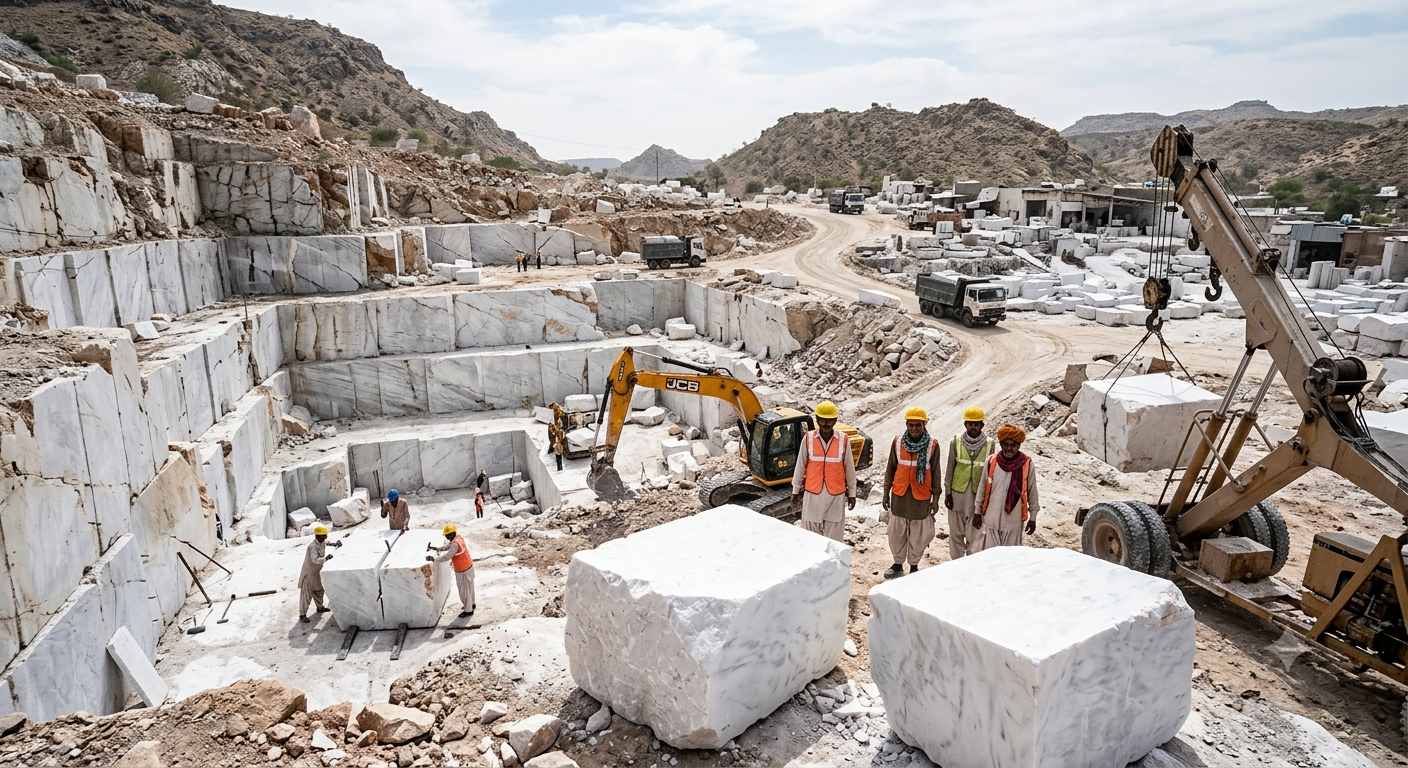
A Geological Masterpiece
Makrana marble, sourced from the Nagaur district of Rajasthan, is a metamorphic rock that stands entirely apart from other commercial marbles. What makes it so extraordinary is its chemical composition. It boasts an exceptionally high percentage of calcium carbonate (often up to 98%), which makes the stone remarkably pure and luminous.
Because it contains almost no impurities or iron, Makrana marble never loses its shine or turns yellow over time. It is highly non-porous, meaning it resists water seepage and withstands extreme weather conditions. Unlike softer stones that dull with age, Makrana actually grows more polished and radiant as it is touched and worn by time.
The Heritage of the Artisans
The story of Makrana is inextricably linked to the artisans of Rajasthan. When Shah Jahan commissioned the Taj Mahal in the 17th century, the stone was transported hundreds of miles by a fleet of elephants and bullock carts. But bringing the stone was only half the work; carving it required a level of skill that has since been passed down through generations of sculptors.
Today, the chisels of master craftsmen—especially those working in the vibrant workshops of Jaipur—continue this legacy. Carving Makrana marble requires immense patience and precision because the stone is notoriously hard. A single slip of the chisel can ruin months of work, but in the hands of a master, this unforgiving stone yields breathtaking, lifelike detail.
From Imperial Monuments to the Home Mandir
While Makrana is famous for architectural marvels like the Victoria Memorial in Kolkata and the Dilwara Temples in Mount Abu, its most intimate application is in spiritual art.
Because of its purity and radiant energy, Makrana marble is considered highly auspicious in Vastu Shastra. Today, the world's finest artisans use this exact same stone to craft divine god idols, exquisite home temples, and majestic antique singhasan chowkis.
When a marble statue is placed in a home, it is not merely a piece of decor. The natural, cooling properties of the high-quality stone are believed to ground the energy of the room, creating a serene environment for worship. The translucent quality of the white marble catches the light of a simple diya, bringing a warm, lifelike glow to the deity's face.
The story of Makrana marble is one of endurance. Whether standing as a towering monument to an emperor's grief or serving as a peaceful sanctuary in a modern home temple, it remains a timeless symbol of purity, devotion, and masterful Indian craftsmanship.

