
The Gateway to Bhav (Devotion)
When a devotee stands before a home mandir, they are not looking for an anatomical study of the human form; they are seeking a connection. This connection is established through Bhav—the emotional resonance between the worshipper and the deity.
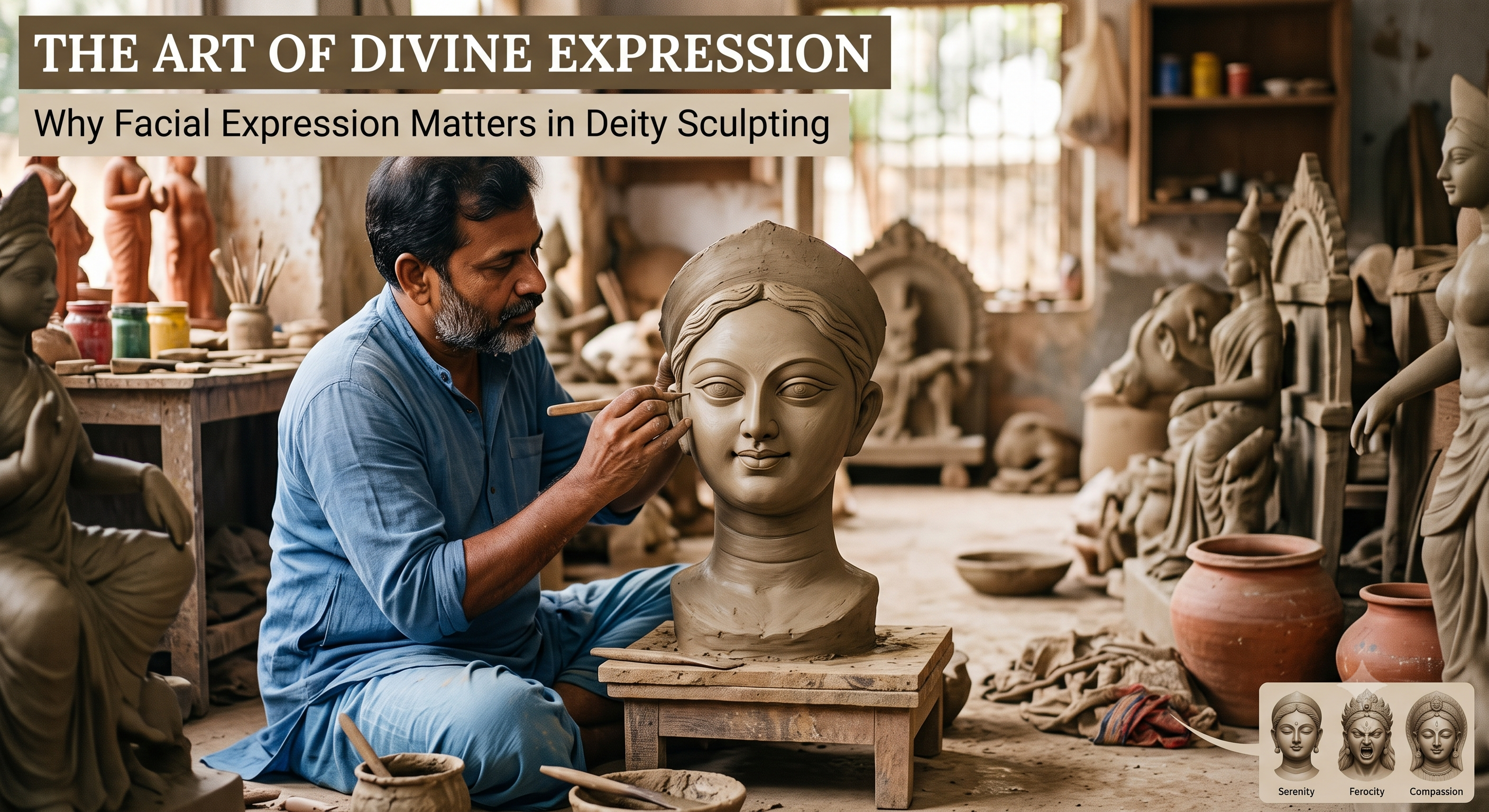
If a marble idol’s face is rigid or vacant, it remains a mere decorative piece. But when a master artisan—like those continuing the legacy in the workshops of Jaipur—captures the right emotion, the stone seems to listen. A slight tilt of the lips can convey profound compassion. The precise curving of the eyelids can radiate absolute peace. It is the facial expression that transforms a quiet corner of your home into a sanctuary of positive, living energy.
The Forgiving Stone and the Unforgiving Chisel
Crafting these micro-expressions is where true mastery is tested. Premium white marble, such as Makrana, is renowned for its purity and ability to hold breathtaking detail. However, carving a face into this hard, metamorphic rock leaves zero room for error.
-
The Eyes: In traditional sculpting, carving the eyes (Netra Unmilanam) is often the final and most sacred step. A millimeter too deep, and the deity looks angry or shadowy. A fraction too shallow, and the gaze appears lifeless.
-
The Smile: A divine smile is not a wide grin; it is a subtle, internal joy that must be coaxed out of the stone. The artisan must understand light and shadow perfectly, ensuring the smile looks natural whether illuminated by morning sunlight or the warm glow of an evening diya.
Distinct Expressions for Distinct Deities
A master sculptor does not use a single "peaceful face" template. Every deity embodies a unique energy, and Vastu Shastra dictates that this energy must be accurately reflected in their expression:
-
Lord Krishna: His face must capture a delicate balance—the mischievous charm of a child, combined with the infinite compassion of the supreme protector.
-
Lord Shiva: A Shivling represents formless energy, but when Shiva is sculpted in human form, his face must radiate absolute, undisturbed serenity. The half-closed eyes signify deep meditation and detachment from worldly chaos.
-
Lord Hanuman or Goddess Durga: While these deities are fierce protectors, idols meant for home worship are specifically carved with a Saumya (gentle and calm) expression. The face must assure the family of unwavering protection without introducing aggressive energy into the home.
The next time you select a marble god idol to place on your singhasan chowki, look closely at the face. Beyond the quality of the stone and the richness of the gold detailing, seek out that spark of life in the eyes and the quiet comfort in the smile. That is the mark of true craftsmanship, and the foundation of a beautiful, spiritually grounded home temple.

